Hello welcome to my Blog

Mezze is widely served in the Greek and Middle eastern world. An assortment of little dishes and tasters which accompany a nice ouzo or a glass of wine. So when you read mezze moments you will have tasty snippets of life as I live it, India for four years and now Brisbane Australia, all served up with some Greek fervour and passion.

Search This Blog

Thursday, 12 September 2019

Charles Darwin National Park

So this was a Bomb Dump.This is where the Australian Army kept all its ammunition. And they have sensibly kept all the evidence in INERT form you will be pleased to hear, as a salutary reminder of the horrors of war. There was an exhibition in one of the ammunition hangers they preserved. What I love is that they have decided to turn this whole previously military area, into a National Park honouring no lesser a man than Charles Darwin after whom the city is named. So this is is the only National Park I have entered and being confronted with a Bomb. Have any of you seen one? It sends shivers up my spine as I imagine the death and destruction it leaves in its wake.
It made my sense of enjoyment double and in the dry and parched land I walked and found wonders of nature - Charles D would have been happy to be with me - and Charles G too. 


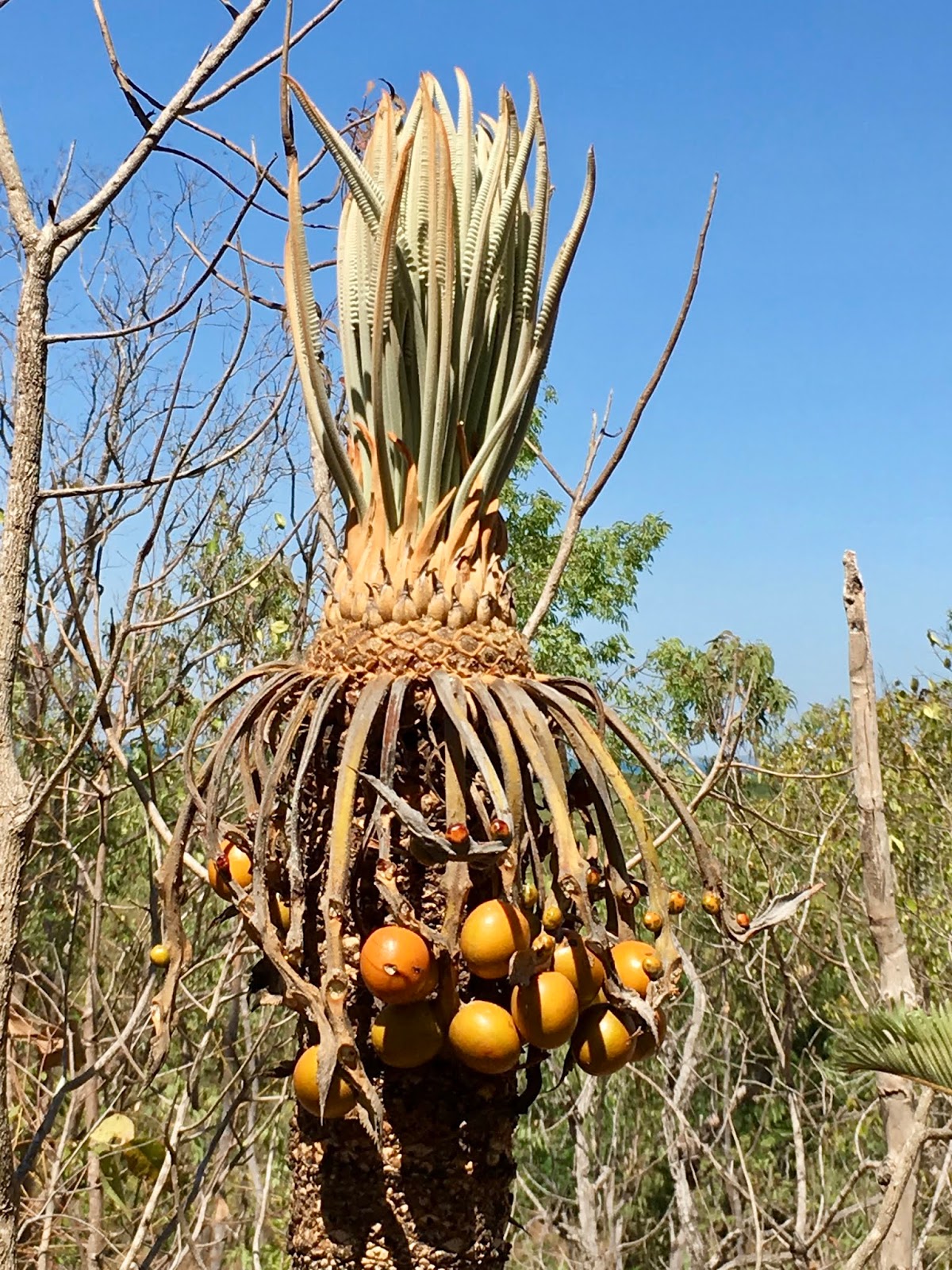
This lovely National Park is close to the city. It was and is Aboriginal land with shell middens dotted around. Its main expanse are large areas of mangrove swamp which are such important environments for sea and land life. On our way to the mangroves, cycads which have always been a source of fascination to me, showing me their many faces and aren't they just wonderful. In one photo I managed to catch three of them at different stages.  This is the two finger cycad salute. 


 This male red honey eater was darting in among the trees along with its less brightly coloured females. Excuse slight fuzziness but they are extremely flighty.


The blooms which pop out at you are so affirming of nature's ability to return time after time, deprived and dry, yet strong, beautiful and resilient. 


 Why not convert all Military Arsenals into National Parks - the world would be a happier, safer, greener place and isn't that what we are all striving for? Another Aussie Great.


Wednesday, 11 September 2019

Termite Towers

This deserves a blog all of its own. We came across two types of Termite Towers yesterday in Litchfield National Park. They are Magnetic and Cathedral  Mounds- so let me guide you to them.
The architects and builders are these tiny insects that measure about 4 to 15 mm. Admittedly there may be a fair few of them but collectively they work their little socks off and build these impressive Termite mounds by taking the soil from underneath them and mixing it with saliva and excreta. 
The story however doesn't end there. There are two types - one is Magnetic and one is Cathedral, so in short though the Termites might be cross at me reducing their life's work to a couple of sentences it works like this. 
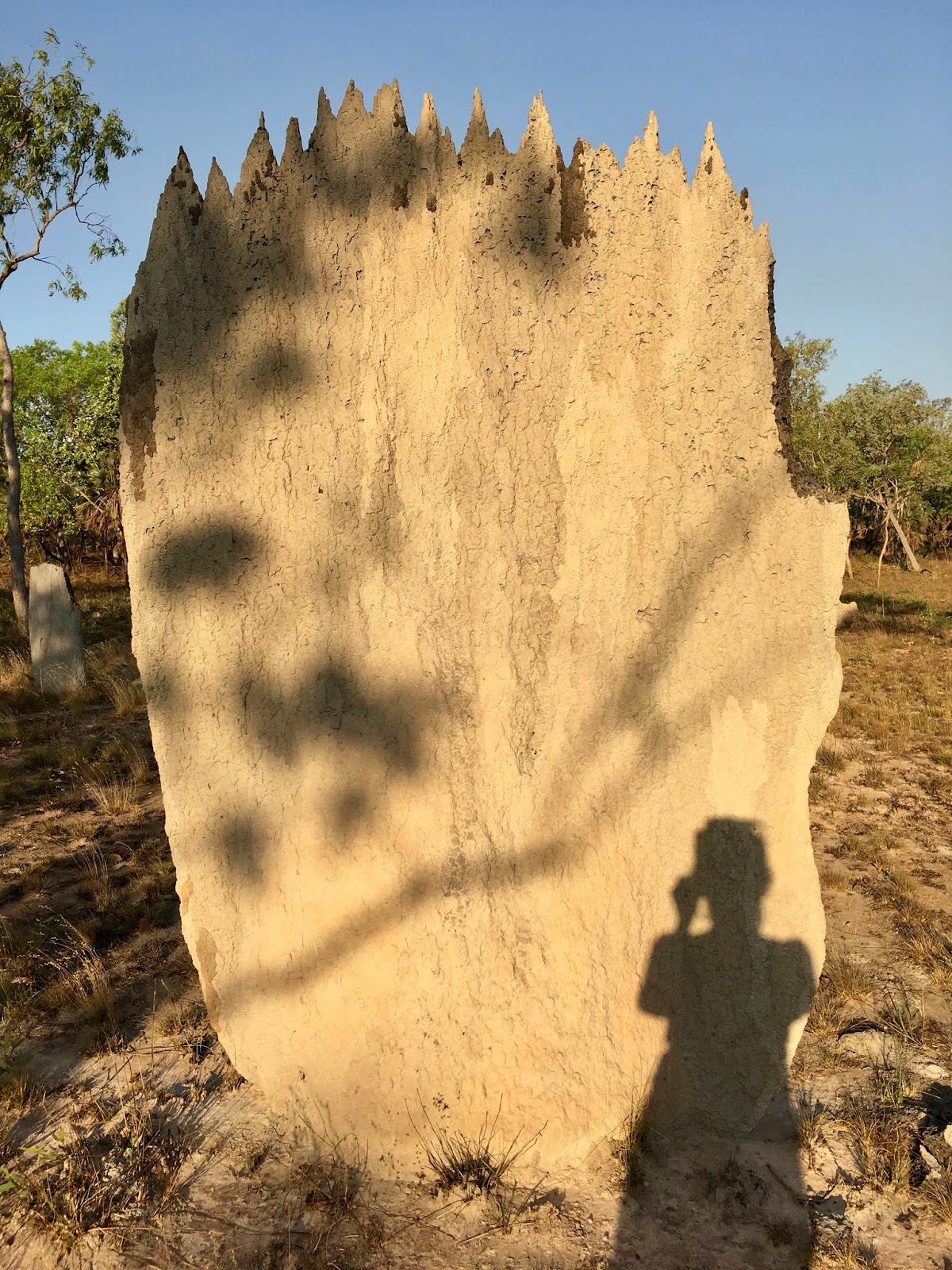
These Termite Mounds may be up to 100 years old and are unique to this park and Northern Territory. The Magnetic Termites build these mounds with thin edges pointing north south and the broad backs pointing east west. They build them this way to minimise their exposure to the sun and to keep the mounds cool for the magnetic termite inside. 


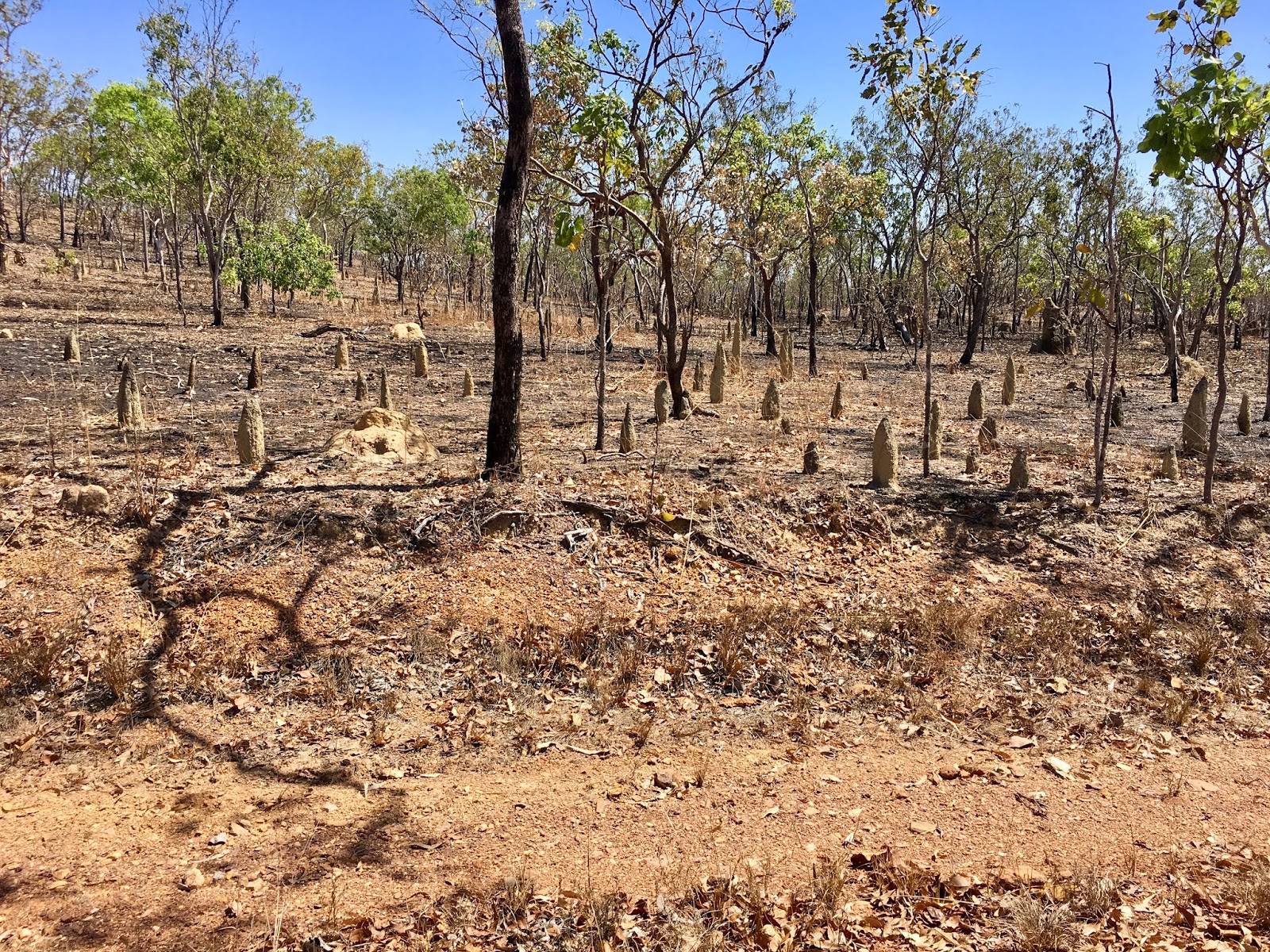
This is perhaps the kindergarten version of one and the next photo is the graveyard look alike as they appear as grey headstones in a cemetery. 


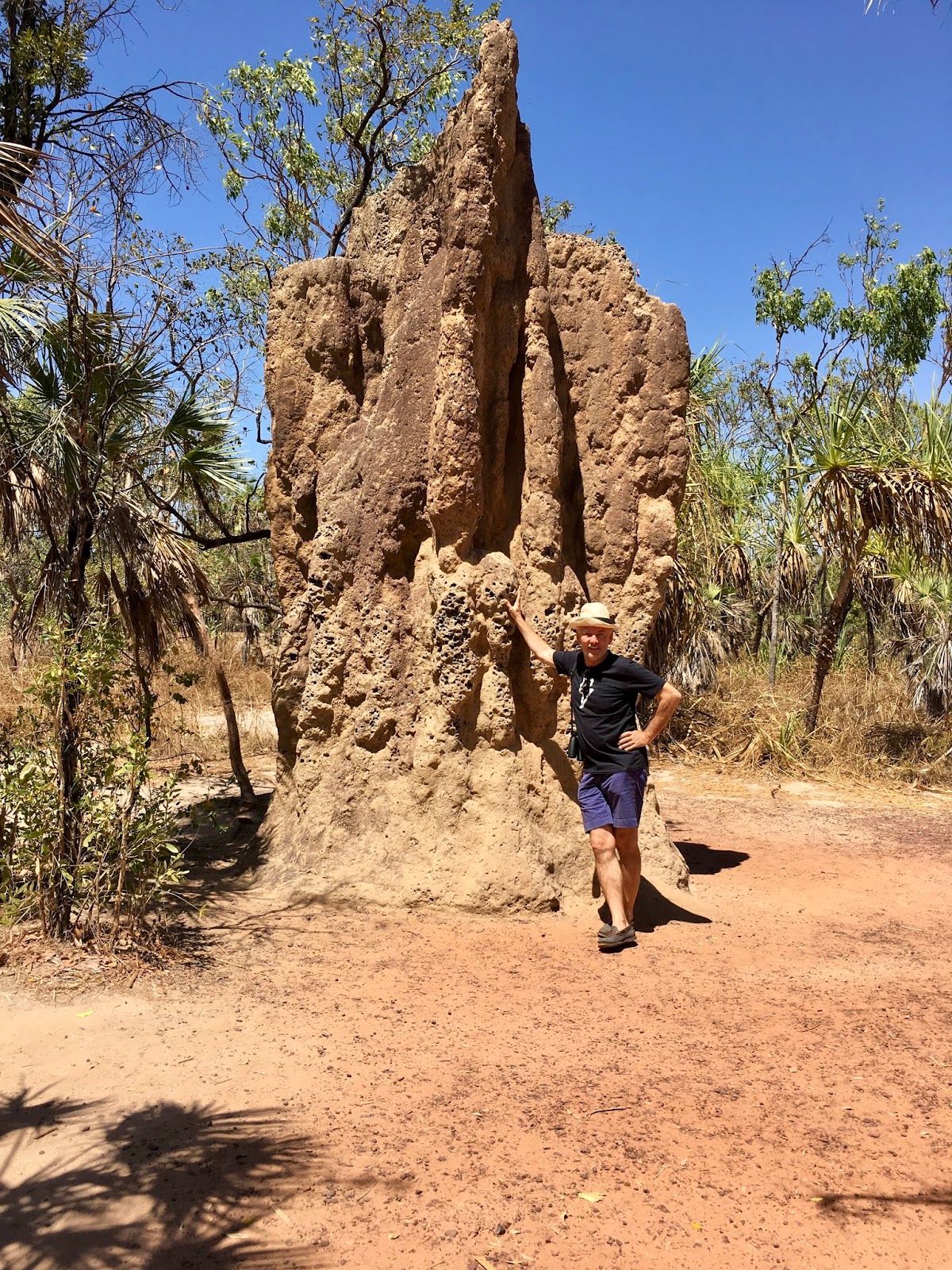
The Cathedral Mounds are like budding buildings with sections added to the central core. This one is said to be about 50 years old and most of them are still living mounds as can be seen by the little termites going in and out of them. 


So this proves without a shadow of a doubt that you can be tiny and build towering edifices with some spit and shit which are more impressive than any Trump Tower. In fact 4mm tiny.

Tuesday, 10 September 2019

Litchfield National Park

Litchfield is some 90 kms from Darwin along the famous Stuart Highway. There is a road which actually crosses the park and NT have made a brilliant job of making many of the park's attractions very accessible and so very enjoyable.

It was difficult to know what to expect. The ground is very dry and there is scrub growth in the form of small palms and thin eucalypts.We thought that the advertised waterfalls and natural ponds would be all dried up as it is nearly the end of the dry season for the Top End as it is called. The other interesting factor is the considerable swathes of the forest which were burnt. In some parts we could see the smoke still rising from the logs. We were not sure if these were controlled fires allowing the forest to regenerate or fires out of control. It brought an uncomfortable vulnerability to driving through these areas and of course made me think actively about the 70 or so bush fires in Queensland burning people's houses and forests just in our backyard unfolding with catastrophic effect this very day. 


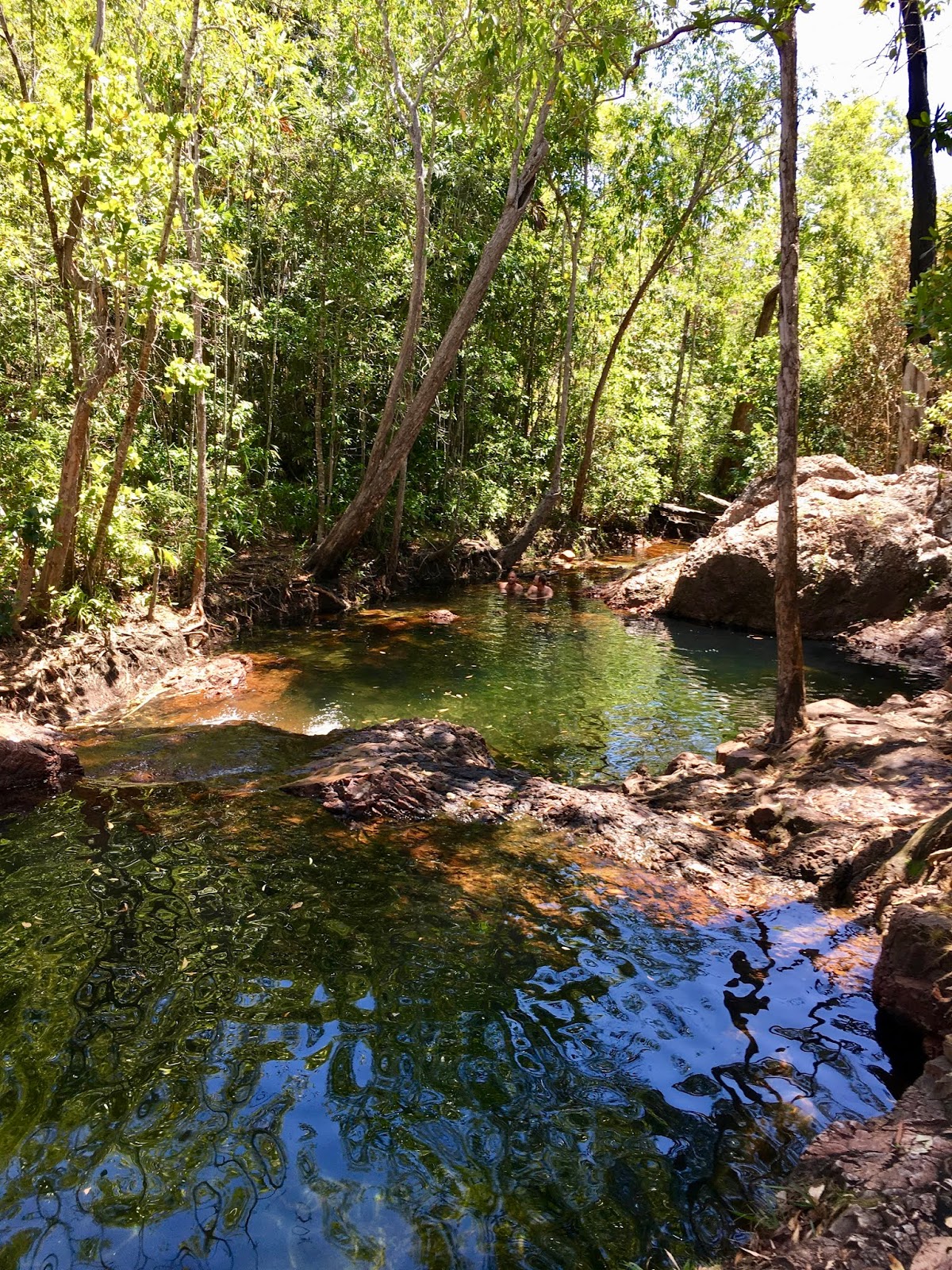
Our first stop was Buley RockHole and we could really have stayed there all day. A river which flows through the National Park has water all year round and it is able to do so because of the sandstone rocks which absorb the water in the wet season and then slowly release it in the dry. We decided to walk to Florence Falls. Everywhere in the national park are beautiful laid paths, sometimes with the pink local rock which makes walking easy and comfortable. It is largely flat. The heat was intense as we walked to the Falls because the forest is thin and quite low. There is no canopy to speak of but on the plus side we could see clearly ahead, we could spot birds and flowers in the bright sunlight and we could take our clothes off and cool off in one of many beautiful fresh water pools. 


The waters were beautiful and cool and the setting was almost fairy like. The river meandered down and the pools are deep along the way. Florence Falls gave us a double waterfall coming off the mountain and a much bigger pool which was more popular. 

 Cooler, we headed to a swamp ( now largely dry) where we spotted a Black Cockatoo and from there to Tolmer Falls. A deep, deep crevasse and a water fall but with a big cave underneath which is home to rare and protected Ghost bats and Horseshoe bats. 


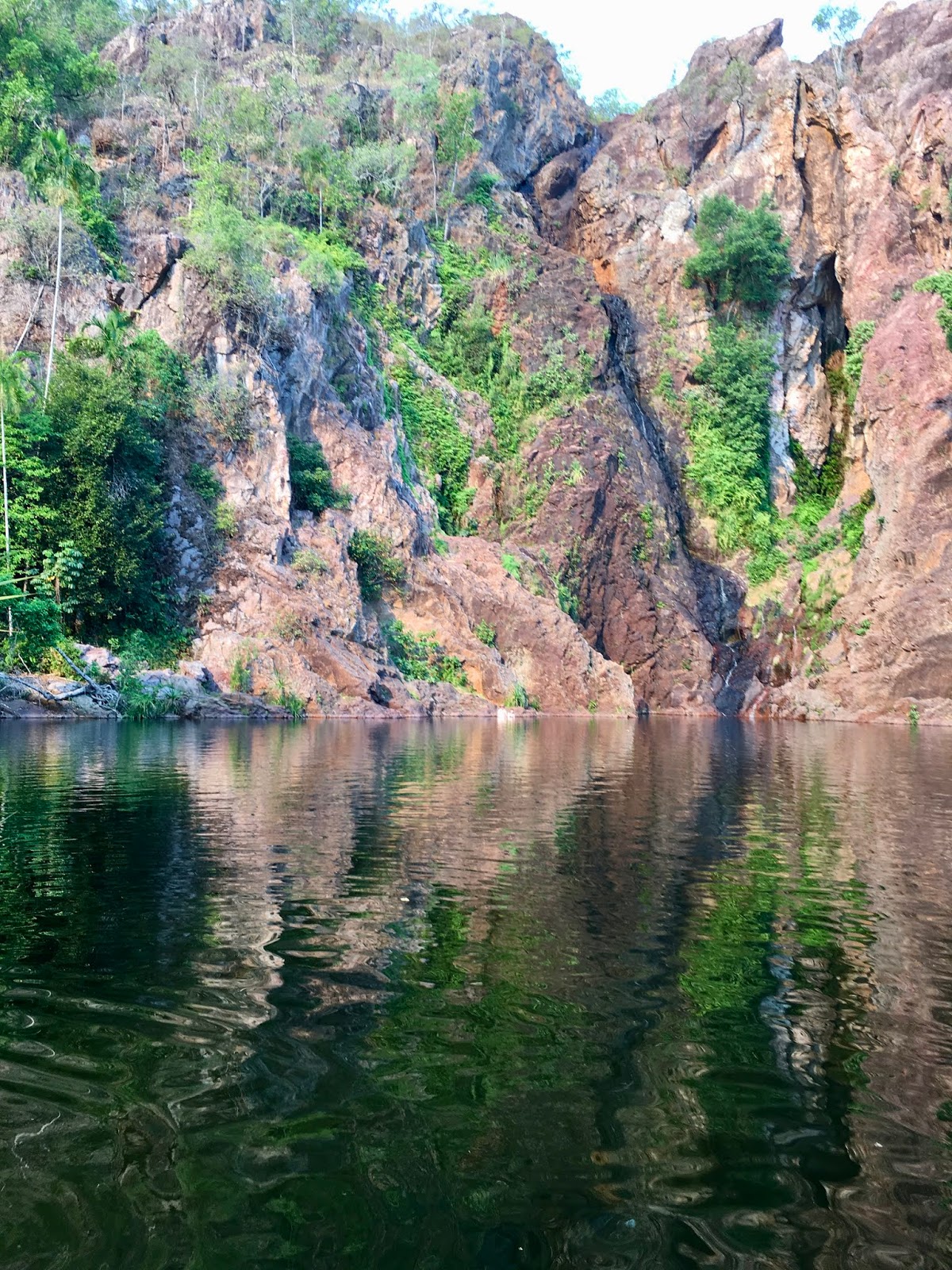
Our final stop for the day was  Wangi Falls the biggest and most beautiful of the freshwater pools. There was a notice to say that Wangi was closed in the wet season, ( so we were lucky to be there now as we could swim) because the crocodiles move in !!


Aussie Awesomeness at its best complete with crocs and fires. We survived and loved every minute. 


Monday, 9 September 2019

Waterfront Darwin

It's not a big city and having being destroyed twice, not much has been preserved. Darwin was bombed by the Japanese in 1942 and was again destroyed in Hurricane Tracy on Christmas Eve in 1974. So with that in mind we walked along to the city taking in the old and restored Court House which is now an administrative centre and the existing Governor's house which has one of the most beautiful bougainvillea hedges I have ever seen. 

This is the land of the Larrakia people 

The territory had two important groups of migrants, the Chinese and yes, you guessed it the Greeks. A Greek church and Chinese temple still exist to this day. Here are two photos of the Greeks who arrived here explaining they were pearl divers and then builders. Paspaley is the biggest pearl company existing to this day in Australia and it was founded by the Paspalis family in 1919. 


The Esplanade is very long. One one side apartment blocks and hotels. On the other side parkland and paths. We walked about 10 kms and took in the view, no beaches here, mangroves and many trees which are home to many birds. We loved the double barred finch which was playful and plentiful in the trees and on the ground. We also enjoyed watching the orange footed scrub fowl walking around in a very comical fashion. The lovely pied imperial pigeon and many kites swooping overheard, plovers and crested terns. 


The vegetation is lush and the colours pop out - but it is also quite dry at the moment which reflects the general lack of rain across Queensland and the Northern Territory. 


We walked to Stokes Hill Wharf seeing the cormorants silhouetted in the sunset and enjoying the swopping seagulls and crested terns. 
Oysters, fresh prawns and barramundi, the order of the day, to finish a beautiful first encounter with the capital of Northern Territory.  

Sunday, 8 September 2019

Come fly with me.

We set off this morning from Brisbane and as the plane took off we had a magnificent view of the city and the river. It is such a beautiful place. A little further a view of the coastline shimmering and the more worrying picture of the smoke from the fires in the hinterland of the Gold coast. 
As we progress a vision of rutted browness. No other words to describe it really until we get to the gulf of Carpentaria and the rivulets there and the snake rivers which makes me understand Dreamtime better and the stories about snakes being mythical creatures. You can see why up here. 
Then the approach to the city we are visiting Darwin, the twice destroyed capital of Northern Territory which we are about to explore.